

WHAT IS A FABRIC BUILDING?
At its most basic level, a fabric building combines a rigid structural frame with a tensioned fabric membrane to create a semi-open or fully enclosed space.
The frame provides the structural strength, while the fabric membrane forms the building envelope—protecting the interior from the elements and, depending on the material used, allowing natural light to enter the space.
Fabric buildings can range widely in design and performance. Some are simple, non-engineered structures intended for temporary or light-duty applications, while others are fully engineered building systems designed to meet building codes and perform in extreme, life-threatening environmental conditions.
Because the term “fabric building” is used broadly, it’s important to understand that not all fabric structures are designed to the same standards. The level of engineering directly impacts safety, structural integrity, longevity, and overall performance.
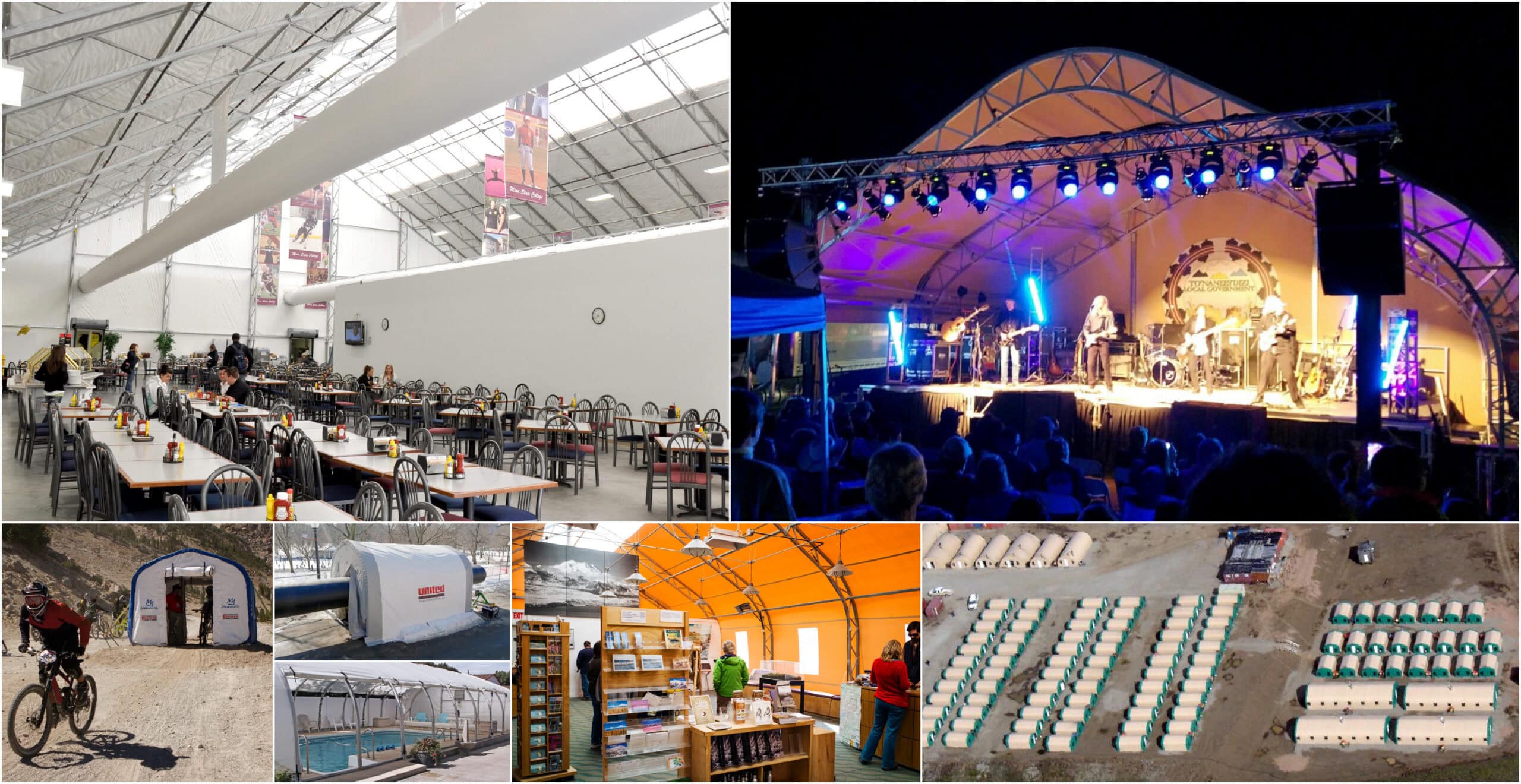
Fabric buildings are used across a wide range of industries and environments, providing flexible, rapidly deployable space for both temporary and permanent applications.
Common uses include:
- Warehousing and on-site storage facilities
- Laydown facilities and material staging areas
- Expanded manufacturing and fabrication facilities
- On-site repair and maintenance facilities
- Vehicle and equipment storage buildings
- Mining and resource exploration camps
- Living facilities, including dormitories, dining halls, laundry, and hygiene facilities
- Construction site support structures, including lunch tents and workforce shelters
- Drydock and marina facilities
- Data centers and mission-critical support facilities
- Environmental and remediation enclosures
- Outdoor event structures and stage covers
- Modular classrooms and training facilities
- Indoor aquatic centers, sports facilities, and swimming pool enclosures
From arctic conditions to desert and tropical environments, fabric buildings provide reliable, adaptable space solutions engineered to perform in demanding conditions while supporting a wide range of operational needs.
KEY BENEFITS OF FABRIC BUILDINGS
Fabric buildings offer a range of advantages depending on their design, materials, and level of engineering:
- Rapid Installation – significantly faster to deploy than traditional construction methods
- Open-Span Interiors – large, unobstructed spaces without internal support columns
- Natural Lighting – fabric membranes can allow daylight to illuminate interior spaces, reducing the need for artificial daytime lighting
- Flexible Foundations – can be installed on a variety of surfaces, including concrete, gravel, or prepared ground
- Relocatability – many systems can be disassembled and relocated for use across multiple projects
Fully engineered fabric buildings provide additional performance advantages:
- Engineered Performance – designed to meet area-specific wind and snow loads in accordance with IBC and local building codes
- Structural Reliability – built to withstand full environmental loads without relying on design assumptions such as “snow shedding”
- Integrated Building Systems – can be equipped with insulation, HVAC systems, lighting, electrical, flooring systems, and a range of door and window options to enhance energy efficiency, comfort, and usability
- Repeat Deployment Capability – engineered for multiple setup and takedown cycles without compromising performance
- Lifecycle Efficiency – lower total cost of ownership through durability, energy efficiency, and reusability
STRUCTURAL SYSTEMS USED IN FABRIC BUILDINGS?
Not all fabric buildings are built the same way. The type of structural system used plays a major role in performance, durability, and application.
Single-Arch Frame Systems
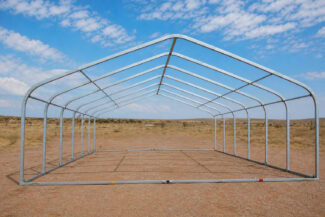
- Curved (arch-style) or straight-wall (gable-style) structural designs
- Efficient load distribution across the frame system
- Common for modular, portable, and rapidly deployable buildings
I-Beam Frame Systems
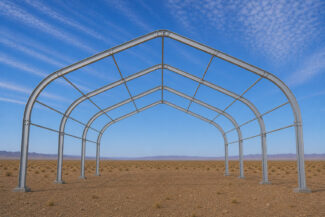
- Utilized in some fabric building designs
- Heavier, rigid frame construction
- Often associated with more permanent installations
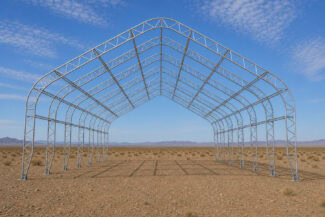
Double-Arch / Truss Systems
- Increased structural rigidity and strength
- Capable of wider spans and larger facilities
- Ideal for warehouses, aircraft hangars, and industrial operations
While steel is the most widely used material due to its strength and durability, fabric buildings may also incorporate:
- Aluminum – lightweight, corrosion-resistant, ideal for transportable structures
- Composite materials (such as fiberglass) – used in specialized applications, including radar and electronic enclosures, where signal transparency is required
FABRIC STRUCTURES vs ENGINEERED FABRIC BUILDINGS
Some fabric structures are fully engineered to meet International Building Code (IBC) and local building code requirements for wind and snow loads. Others rely on simplified design approaches – such as “snow shedding” – which reduce the structural demands placed on the building.
Other Fabric Structures
- Often designed for temporary or light-duty applications
- May not be engineered to meet building code requirements
- Can rely on simplified design approaches or assumptions (like “snow shedding”
- Performance and durability can vary significantly depending on design and materials
Engineered Fabric Buildings
- Designed to meet International Building Code (IBC) and local building code requirements
- Engineered for full wind and snow load conditions
- Do not rely on “snow shedding” assumptions
- Built for long-term durability and repeated deployment
- Proven performance in extreme environments
Engineered fabric buildings are designed to withstand real-world conditions – not assumptions.
LEARN MORE: CHOOSING THE RIGHT BUILDING SYSTEM
Understanding what a fabric building is only the first step. The next step is understanding how engineered fabric buildings compare to other building solutions – and what factors matter most when selecting the right system for your application.
Compare Building Systems
Explore a detailed comparison of fabric buildings vs trailers, containerized buildings, pre-engineered metal buildings (PEMBs), and conventional construction.
Things to Consider Before Buying a Fabric Building
Understand key factors such as engineering, materials, installation, and long-term performance before making a decision.
Why Choose Fabric Buildings from Alaska Structures®
Learn what sets Alaska Structures® apart – from advanced engineering and proven performance to complete building systems designed for real-world conditions.
Alaska Defense™ is now the military division of AKS Industries, Inc. You’ve
indicated your request is for a military requirement.
Please visit the Alaska Defense™ website (www.alaskadefense.com) for
military shelter systems and products.
SHARE YOUR CART