

FABRIC STRUCTURES FOR SUSTAINABLE PRACTICES
As industries embrace new, greener building standards and adapt to evolving regulations, the importance of sustainability and environmental responsibility continues to grow. Buildings and their construction processes significantly contribute to global carbon dioxide (CO₂) emissions. According to the United Nations Environment Programme’s (UNEP) Global Status Report for Buildings and Construction, the building sector accounts for approximately 38% to 39% of energy-related CO₂ emissions worldwide, encompassing operational emissions from energy use and embodied emissions from construction materials and activities.
While the building industry hasn’t always been eco-friendly, sustainable practices are becoming more commonplace to promote environmental stewardship and reduce CO₂ emissions. This shift has led many operations to seek energy-efficient and environmentally friendly building solutions rather than traditional wood, metal, or concrete buildings. Many businesses are turning to fabric structures to improve operational sustainability.
Alaska Structures® provides sustainable fabric buildings that offer numerous advantages for businesses seeking environmentally friendly solutions. Our fabric structures enable a faster and less invasive construction process, leading to reduced energy consumption and minimal maintenance requirements. Engineered for long-lasting durability, they can be easily relocated or reconfigured to adapt to changing business needs. By investing in our energy-efficient fabric buildings, operations can adopt sustainable building practices that limit environmental impact and result in savings on both upfront and long-term expenses.
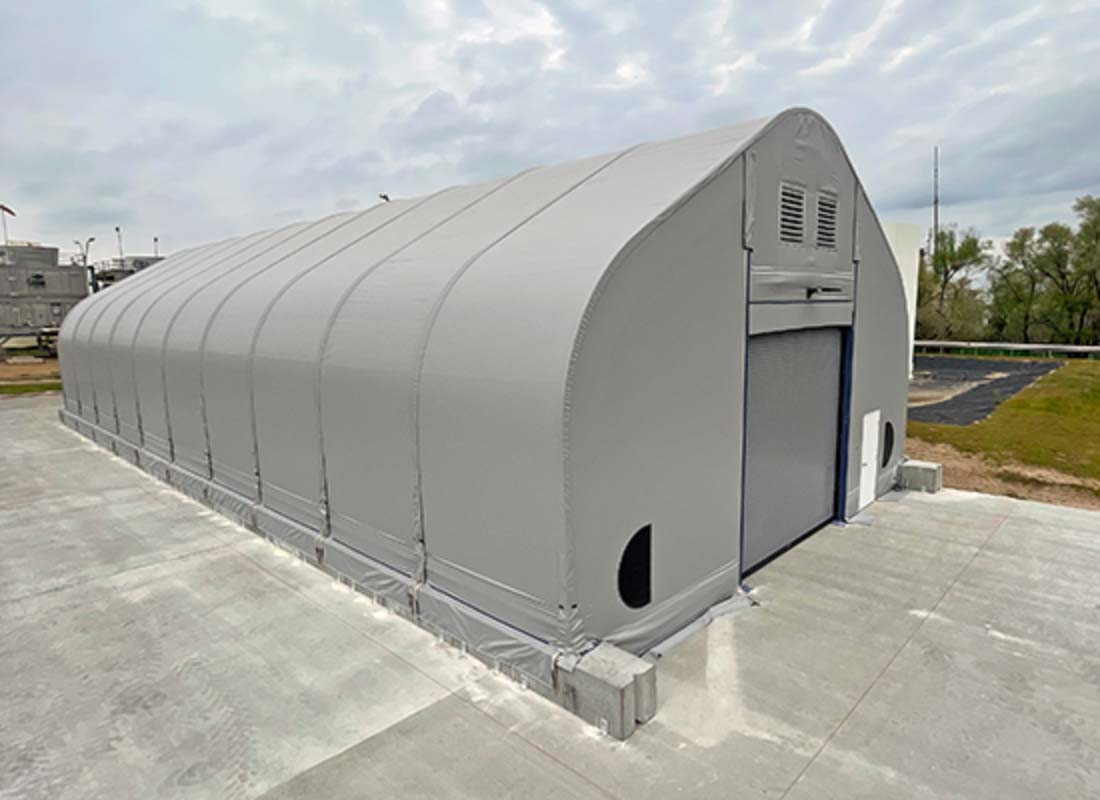
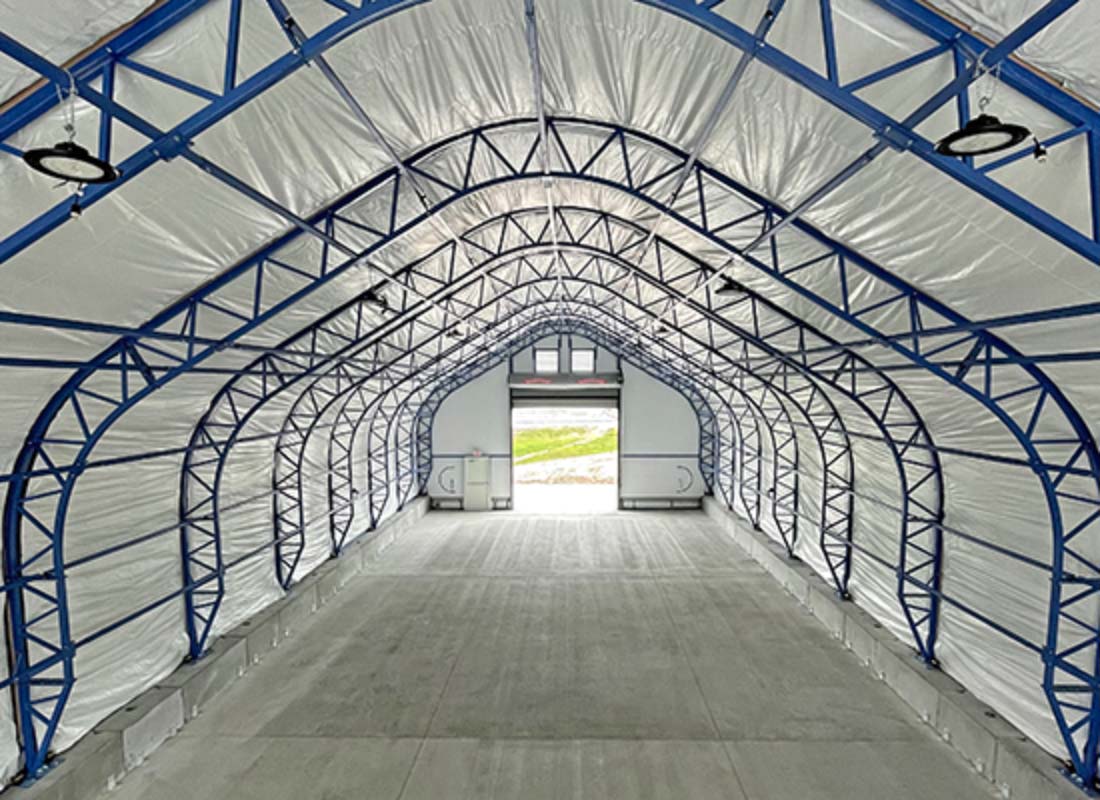
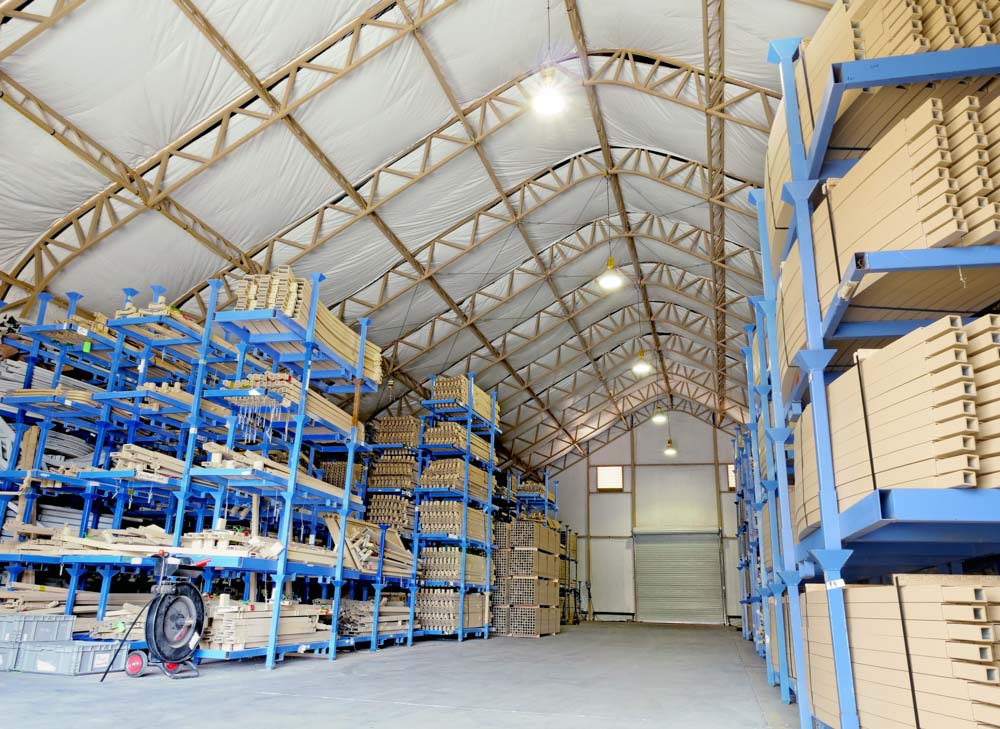
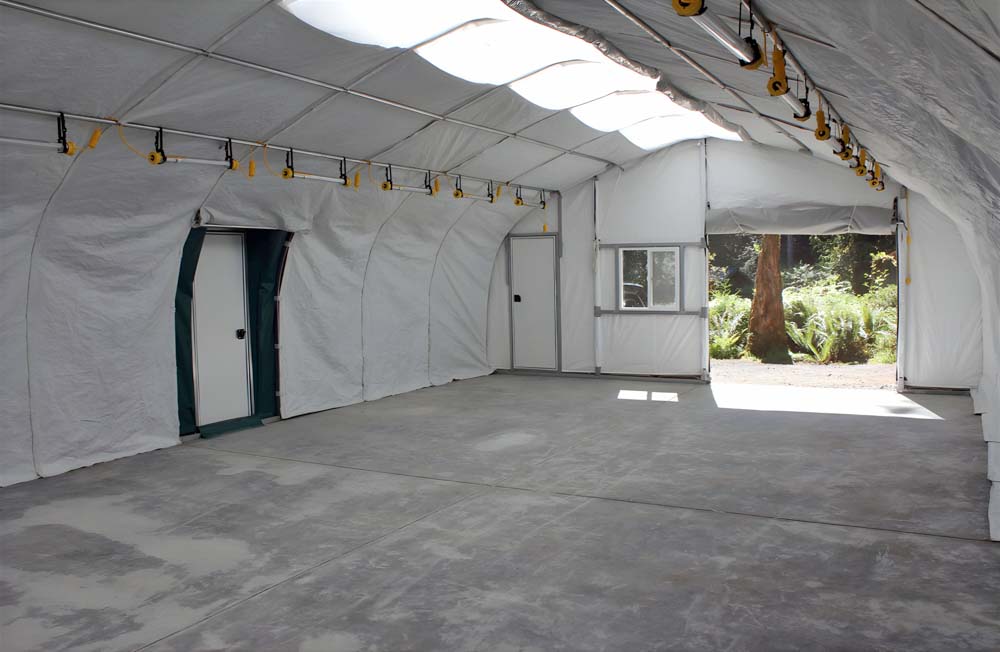
A 40' x 100' DAGB Series™ fabric building provides onsite warehousing at a chemical processing facility features insulation and energy-efficient LED bay lights.
WHY DO SUSTAINABLE BUILDING PRACTICES MATTER?
The construction industry’s substantial environmental impact makes integrating sustainable practices that conserve natural resources and reduce CO₂ emissions imperative. Despite the challenges that may arise when adopting these methods, companies equipped with the right infrastructure can build structures using fewer materials and generating less waste with less labor—all without sacrificing quality or reliability.
Fabric buildings help businesses operate more sustainably. Completing projects with engineered fabric buildings from Alaska Structures® allows businesses to minimize their effect on the surrounding landscape and dramatically cut energy usage, limiting their carbon footprint over time compared to typical wood, steel, or concrete structures.
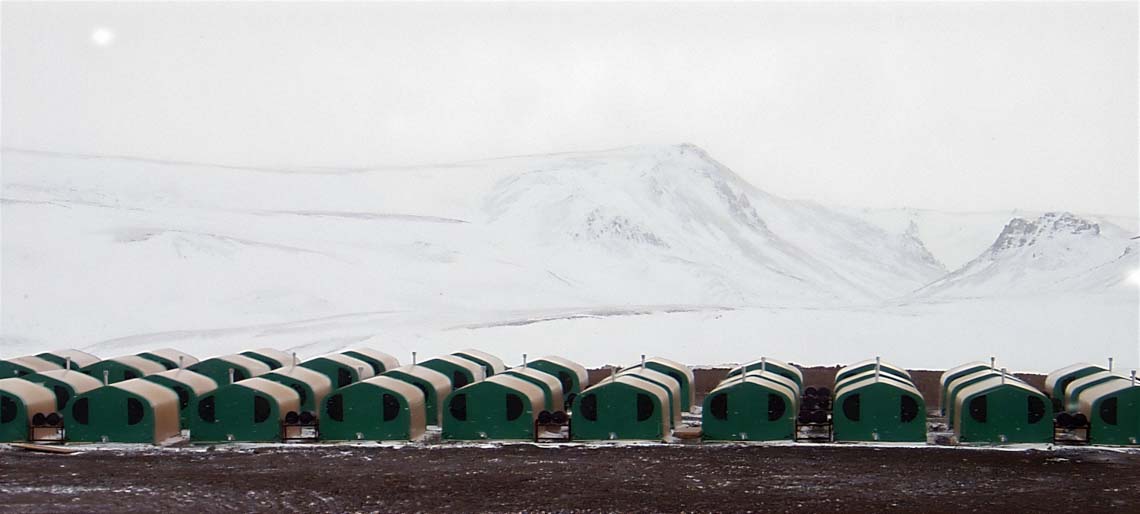
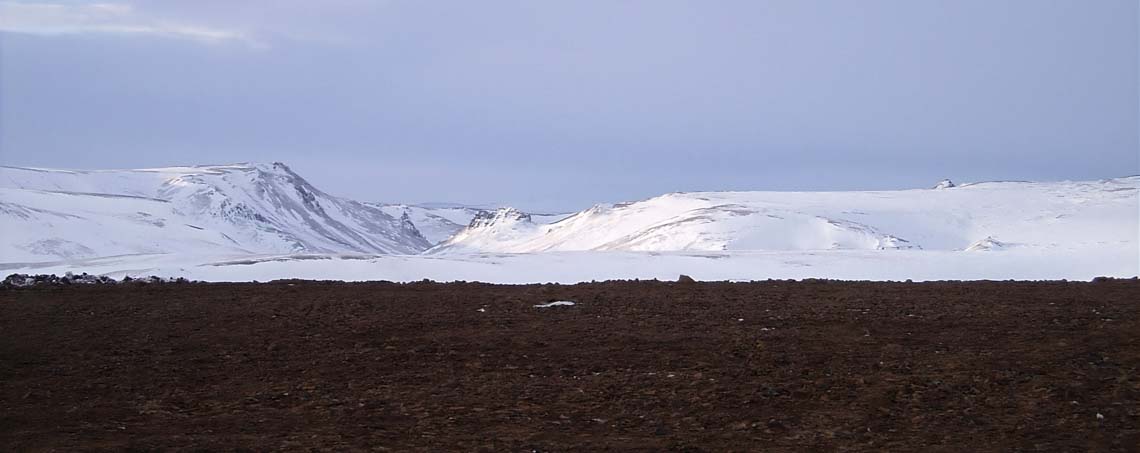
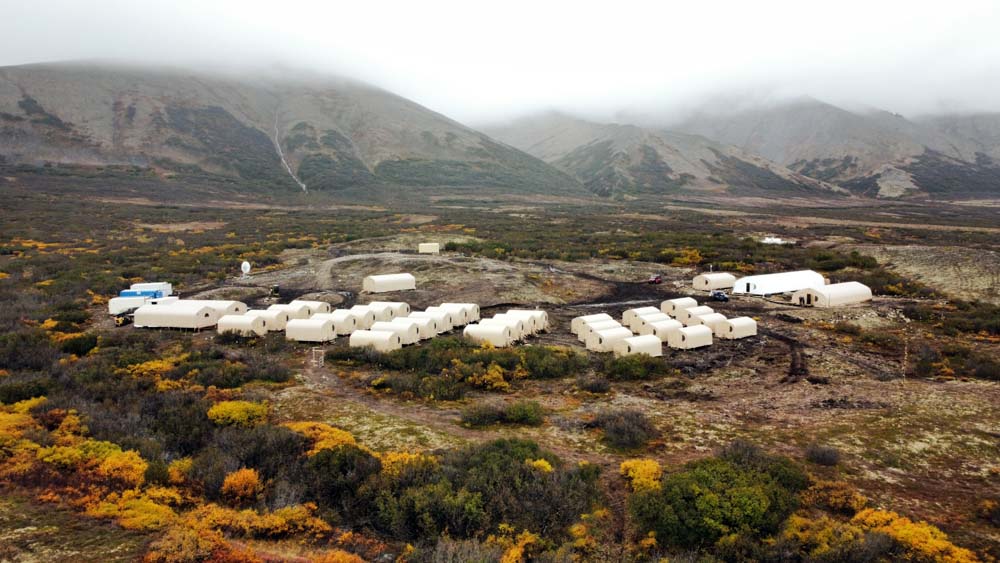
A 700-person mining camp in Northern Siberia features GB Series™ fabric buildings from Alaska Structures®. The mining camp operated for 17 years before being relocated and used an additional 13 years for other mining projects. Shown above is a photo of a portion of the camp and a photo of the site after the camp was removed with minimal environmental impact.
ENERGY-EFFICIENT FABRIC BUILDINGS
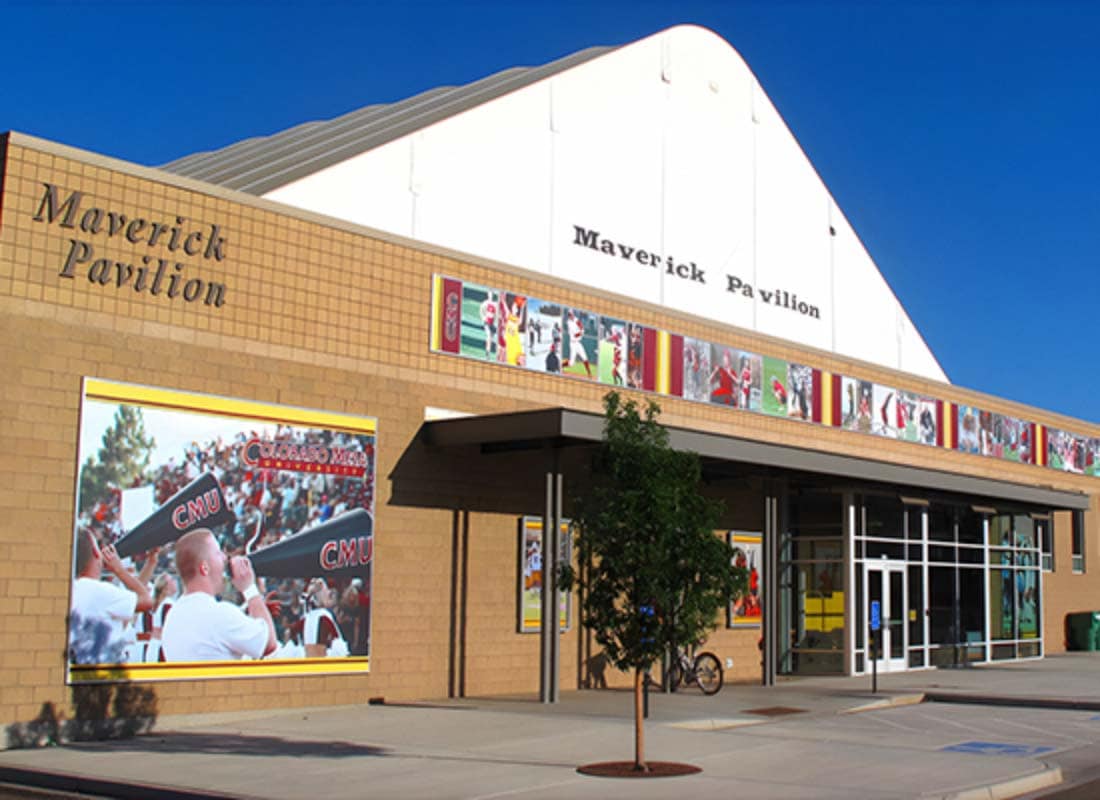
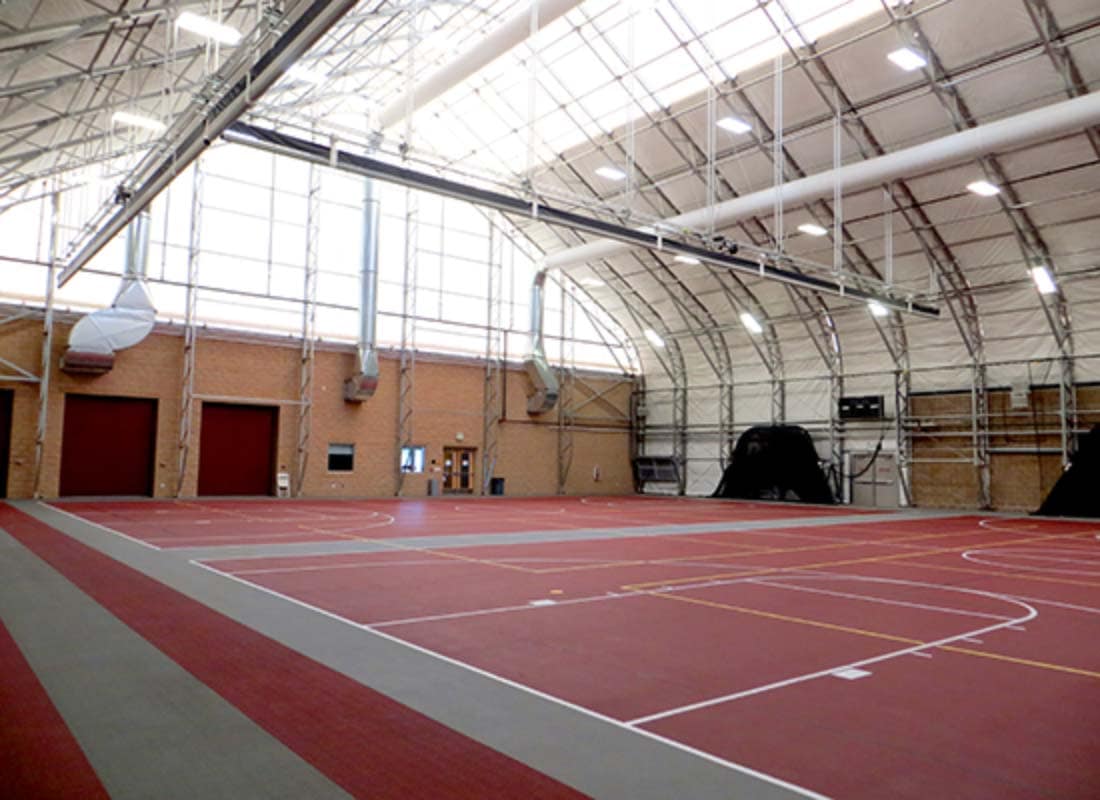
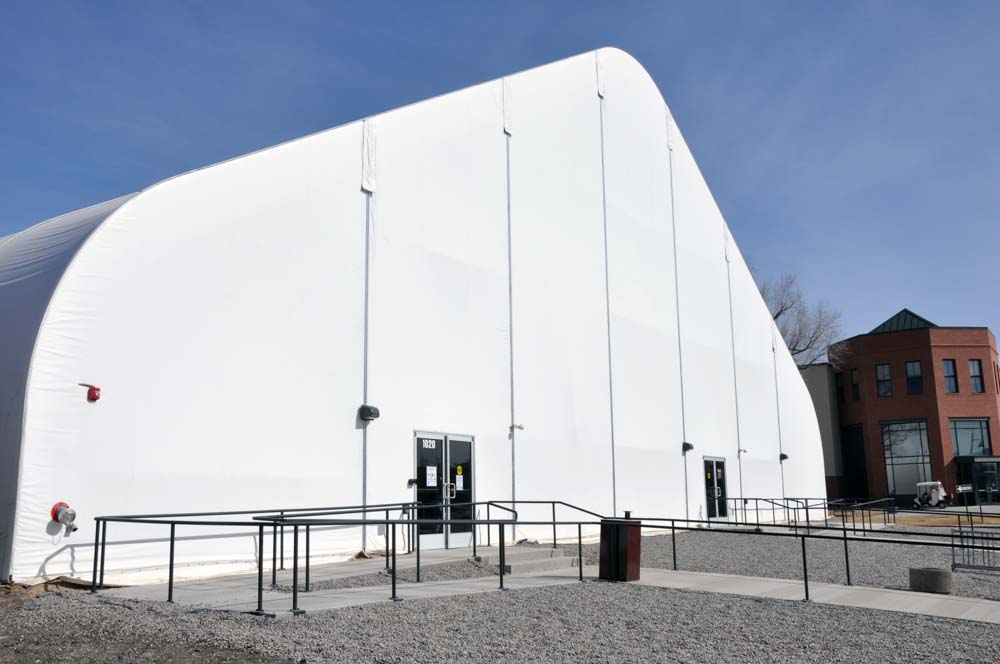
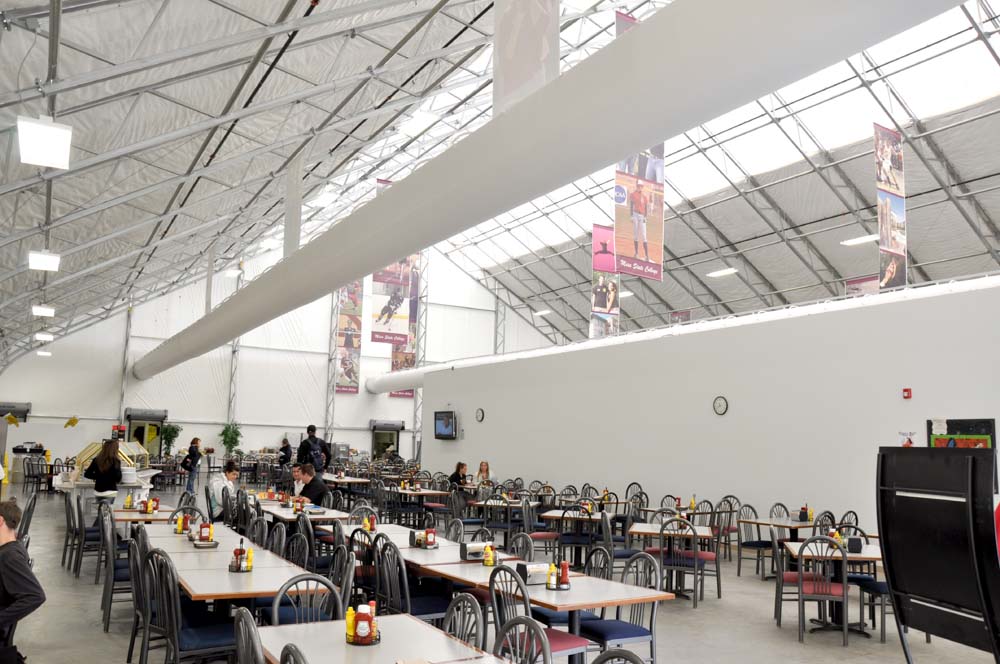
A 120' x 120' DAGB Series™ fabric building used by Colorado Mesa University for 13 years featured HVAC, insulation, and translucent skylight material.
One of the most notable advantages of fabric buildings is their exceptional energy efficiency. The materials used in these structures provide superior insulation and allow for ample natural light to enter, significantly reducing the reliance on artificial lighting and, in mild climates, decreasing the need for heating or cooling systems. This approach not only lowers energy consumption but also enhances the comfort of the occupants. Remarkably, even without HVAC systems, fabric buildings can maintain interior temperatures that are typically 10°F to 15°F cooler than the outside during summer and 10°F to 15°F warmer in winter.
For locations with extreme climates, insulated fabric buildings can drastically the reduce energy needed to maintain comfortable temperatures by up to 35%. When combined with insulation systems like EnerLayer® and SuperLayer®, fabric buildings can be designed to meet any R-value.
GREEN, ECO-FRIENDLY FABRIC BUILDINGS
According to the U.S. Environmental Protection Agency (EPA), a “green building” is the practice of creating structures and using processes that are environmentally responsible and resource-efficient throughout a building’s life cycle—from siting to design, construction, operation, maintenance, renovation, and deconstruction. This holistic approach aims to minimize environmental impact while enhancing occupant health and comfort.
Compared to typical construction methods, fabric buildings from Alaska Structures® are a greener, more eco-friendly solution for several reasons:
- Materials and Resource Conservation:
Alaska Structures® procures raw materials that are sustainably and locally sourced when available. Great care is taken during manufacturing to implement strict practices that minimize waste and adhere to extensive recycling programs. - Reduced Logistics:
Our prefabricated building solutions streamline logistics and transportation. With manufacturing facilities strategically located in the central United States, we distribute products efficiently nationwide and globally. The components of our fabric buildings are exceptionally compact, allowing them to be shipped in substantially lower volumes compared to traditional wood, metal, or concrete building materials. This reduction facilitates fast delivery, minimizes transportation costs, and reduces environmental impact by lowering fuel consumption and emissions. - Sustainable Site Selection and Development:
Our engineered fabric buildings require minimal foundation work, allowing placement on virtually any level surface without extensive ground preparation. This flexibility accelerates construction timelines and significantly reduces environmental disruption compared to traditional methods.For smaller structures, we offer modular flooring systems that enable secure anchoring over uneven or unimproved terrain. This innovative approach allows erection in locations that would otherwise require substantial land alteration, preserving the natural landscape and reducing ecological impact.When installed directly on the ground or using our CORADEX® Raised Flooring System, our buildings can meet zero-impact requirements upon removal, restoring the site to its original condition without lasting environmental footprints. By minimizing land disturbance and promoting reversible installations, our fabric buildings align with sustainable development goals, conserving natural resources and offering flexibility for future land use. - Reduced Construction Schedules and Lower Carbon Footprint:
Our buildings are designed to expedite construction while promoting eco-friendly practices. Requiring minimal tools and reducing the need for heavy machinery simplifies assembly, allowing companies to complete construction and begin operations much faster than with traditional methods. This efficiency significantly reduces the carbon footprint associated with prolonged construction activities.- Fast and Efficient Assembly:
Assembling a 70-foot-wide by 100-foot-long fabric building from Alaska Structures® takes approximately 14 days with a crew of eight people. In contrast, similar-sized fabric structures from other manufacturers can take up to 8 weeks, including 4 weeks of pre-construction site work and an additional 4 weeks for construction. Other solutions often require an onsite technical consultant to maintain warranty coverage, adding complexity and potential delays.
- Fast and Efficient Assembly:
- Eco-Friendly Building Construction Practices:
By minimizing heavy machinery use and reducing construction schedules, we lower environmental impact by:- Reduced Emissions: Fewer diesel engines onsite result in lower greenhouse gas emissions and air pollutants.
- Energy Conservation: Shorter construction periods consume less energy, conserving resources and reducing the carbon footprint.
- Minimal Site Disturbance: Faster assembly limits noise and disruption to the environment and local communities.
- Local Labor and Warranty Assurance:
Assembling a 70-foot-wide by 100-foot-long fabric building from Alaska Structures® takes approximately 14 days with a crew of eight people. In contrast, similar-sized fabric structures from other manufacturers can take up to 8 weeks, including 4 weeks of pre-construction site work and an additional 4 weeks for construction. Other solutions often require an onsite technical consultant to maintain warranty coverage, adding complexity and potential delays.- Enhance Community Engagement: Provide job opportunities and skill development within the local community.
- Reduce Logistics Complexity: Simplify coordination by not relying on external specialists.
- Maintain Full Warranty Coverage: Offer peace of mind without additional stipulations.
- Eco-Friendly Building Construction Practices:
- Minimal or Maintenance-Free Building Solutions:
Our engineered fabric buildings are meticulously designed for durability and longevity. They offer a virtually maintenance-free solution that contributes to a lower carbon footprint. Advanced tensioned fabric membranes ensure our structures withstand the elements with minimal upkeep, setting them apart from traditional materials.- Superior Material Durability:
- Mildew and Rot Resistance: Our membranes resist mildew and rot, eliminating common issues and reducing the need for chemical treatments.
- High Abrasion Resistance: Engineered for higher abrasion resistance, our fabrics withstand harsh conditions and daily wear, extending the building’s lifespan.
- UV Stabilization: UV inhibitors are impregnated directly into the material, preventing rapid deterioration from sun exposure without frequent repairs or replacements.
- Reduced Maintenance Requirements:
Unlike traditional wood, steel, or concrete structures that demand constant upkeep due to corrosion, weathering, and fatigue, our fabric structures require minimal maintenance:- Less Equipment and Labor: Maintenance crews need minimal equipment and time, freeing resources for other operations.
- Operational Efficiency: Engineered for higher abrasion resistance, our fabrics withstand harsh conditions and daily wear, extending the building’s lifespan.
- Cost Savings: Lower maintenance demands translate to significant cost savings over the building’s lifecycle.
- Environmental Benefits:
Choosing a virtually maintenance-free building reduces environmental impact by:- Reduced Carbon Emissions: Fewer maintenance activities decrease heavy machinery use and transportation, lowering emissions.
- Resource Conservation: Fewer repairs mean less material and energy consumption, aligning with sustainable practices.
- Waste Reduction: Longer-lasting structures generate less waste over time, reducing landfill use and pollution.
- Superior Material Durability:
- Easily Relocated, Reconfigured, and Expanded:
Our prefabricated buildings offer unmatched flexibility to adapt to evolving business needs. Designed for easy relocation, reconfiguration, and expansion, these structures can be modified with minimal effort compared to traditional buildings that require extensive construction work for alterations.- Simple Relocation: Buildings can be efficiently disassembled, transported, and reassembled, minimizing downtime and relocation costs.
- Effortless Reconfiguration: Modular design allows quick adjustments to layout or functionality without major construction projects.
- Seamless Expansion: Easily expand by adding new modules or extending existing ones, accommodating growth without delays.
This adaptability saves time and resources, supporting sustainable practices by reducing the need for new materials and minimizing construction waste. Your facility can grow alongside your business, offering a practical, eco-friendly alternative to conventional methods.
- Fabric Buildings Designed for Durability and Recycling:
Our fabric buildings are crafted for exceptional durability and longevity. Customers often report that their original buildings and camp systems remain fully operational for 30 or more years, even in extreme conditions. This longevity reflects our commitment to producing the highest-quality, American-made fabric buildings.- Long-Lasting Durability:
- Extreme Environment Resilience: Designed to withstand harsh climates—from arctic cold to desert heat—ensuring reliable performance over decades.
- Quality Craftsmanship: Meticulous engineering and manufacturing contribute to unparalleled durability.
- Environmentally Friendly and Recyclable:
- Recyclable Fabric Membranes: When replacement is needed, membranes can be recycled, reducing waste and supporting circular economy principles.
- Recyclable Metal Frames: Steel and aluminum frames are fully recyclable, minimizing environmental impact.
- Sustainable Alternative to Traditional Buildings:
From construction to decommissioning, our fabric buildings offer an eco-friendly solution throughout their lifespan:- Reduced Environmental Footprint: Recyclability of membranes and frames makes our buildings more sustainable compared to traditional structures.
- Lifecycle Sustainability: Businesses contribute to sustainability goals at every stage—from resource-efficient manufacturing to responsible end-of-life management.
- Long-Lasting Durability:
IMAGE GALLERY OF ECO-FRIENDLY FABRIC BUILDINGS
ADDITIONAL ENERGY-SAVING IDEAS FOR FABRIC BUILDINGS
When designing a fabric building from Alaska Structures®, consider these energy-saving strategies to further reduce consumption and lower your carbon footprint:
- Energy-Efficient Lighting Solutions: Use LED lights for superior energy efficiency and longer lifespan compared to incandescent, fluorescent, or halogen bulbs.
- Occupancy Sensors and Timers: Install motion detectors, occupancy sensors, and programmable timers to ensure lights are only on when needed, preventing energy waste.
- Optimize Site Positioning: Orient the building to leverage natural sunlight for passive heating in colder climates or minimize sun exposure in hotter climates.
- Choose Energy Star Certified Products: Select office equipment, machinery, and appliances that are Energy Star certified to meet strict energy efficiency guidelines.
- Install Low-Flow Fixtures: Use faucets, toilets, and showerheads that consume less water, reducing the energy required for heating and pumping.
Thoughtfully incorporating these elements will make your fabric building more sustainable and aligned with modern energy conservation goals.
WHY CHOOSE A FABRIC BUILDING FROM ALASKA STRUCTURES?
Investing in engineered fabric buildings from Alaska Structures® is a strategic move toward sustainability and environmental responsibility. Our buildings offer eco-friendly benefits that help businesses significantly reduce their operational carbon footprint. From reduced logistics through compact shipping to sustainable site selection with minimal foundation requirements, our solutions minimize environmental disruption and conserve resources.
With reduced construction schedules, our buildings require less energy and emit fewer greenhouse gases during assembly. The minimal or maintenance-free design lowers environmental impact by reducing resource needs over the building’s lifespan. Our structures are easily relocated, reconfigured, and expanded, providing adaptability without the environmental cost of new construction. Designed for durability and recycling, materials can be repurposed rather than contributing to landfill waste.
Investing in a high-quality, American-made fabric building from Alaska Structures® gives you a versatile and durable solution while actively contributing to a more sustainable future. Our buildings embody eco-friendly practices from construction to operation, aligning with global efforts to reduce carbon emissions and promote environmental stewardship.
Alaska Defense™ is now the military division of AKS Industries, Inc. You’ve
indicated your request is for a military requirement.
Please visit the Alaska Defense™ website (www.alaskadefense.com) for
military shelter systems and products.
SHARE YOUR CART